Introduction
Living with sciatica can feel like an endless battle against your own body. That sharp, electric shock traveling from your lower back down to your toes isn’t just a physical ailment; it’s a disruption to your quality of life. Whether it’s struggling to sit through a movie, finding it painful to drive, or simply losing sleep because you can’t find a comfortable position, the search for relief is often urgent.
While many turn immediately to medication or contemplate surgery, there is a growing movement toward non-invasive, holistic treatments that address the physical structures causing the pain. One of the most effective methods gaining traction is deep tissue massage. By focusing on the deeper layers of muscle and connective tissue, this modality offers more than just temporary relaxation it offers a pathway to functional recovery.
What is Sciatica?

Does Deep Tissue Massage Help Sciatica? Find Out How It Can Relieve Pain
To understand if massage can help, we first have to look at what is actually happening in the body. Sciatica is not a diagnosis in itself; rather, it is a symptom of an underlying condition affecting the sciatic nerve the longest and widest nerve in the human body.
The sciatic nerve starts in the lower back (the lumbar spine), runs through the hips and buttocks, and branches down each leg. When this nerve is compressed, irritated, or “pinched,” it results in the classic symptoms: burning pain, numbness, tingling (pins and needles), or even muscle weakness.
Common Causes of Sciatica
- Herniated Discs: This is perhaps the most well-known cause. When the soft center of a spinal disc pushes through a tear in the tougher exterior, it can press directly against the nerve root.
- Spinal Stenosis: A narrowing of the spaces within your spine, which puts pressure on the nerves.
- Piriformis Syndrome: This is where massage therapy truly shines. The piriformis is a small muscle located deep in the buttock. In many people, the sciatic nerve runs directly under (or even through) this muscle. If the piriformis becomes tight or spasms, it physically compresses the nerve, mimicking the pain of a herniated disc.
How Deep Tissue Massage Works

Many people confuse deep tissue massage with a regular Swedish massage, but the intent and technique are vastly different. While a Swedish massage focuses on relaxation and light surface tension, Deep Tissue Massage is a therapeutic approach designed to realign the deeper layers of muscles and fascia.
The Mechanics of the Method
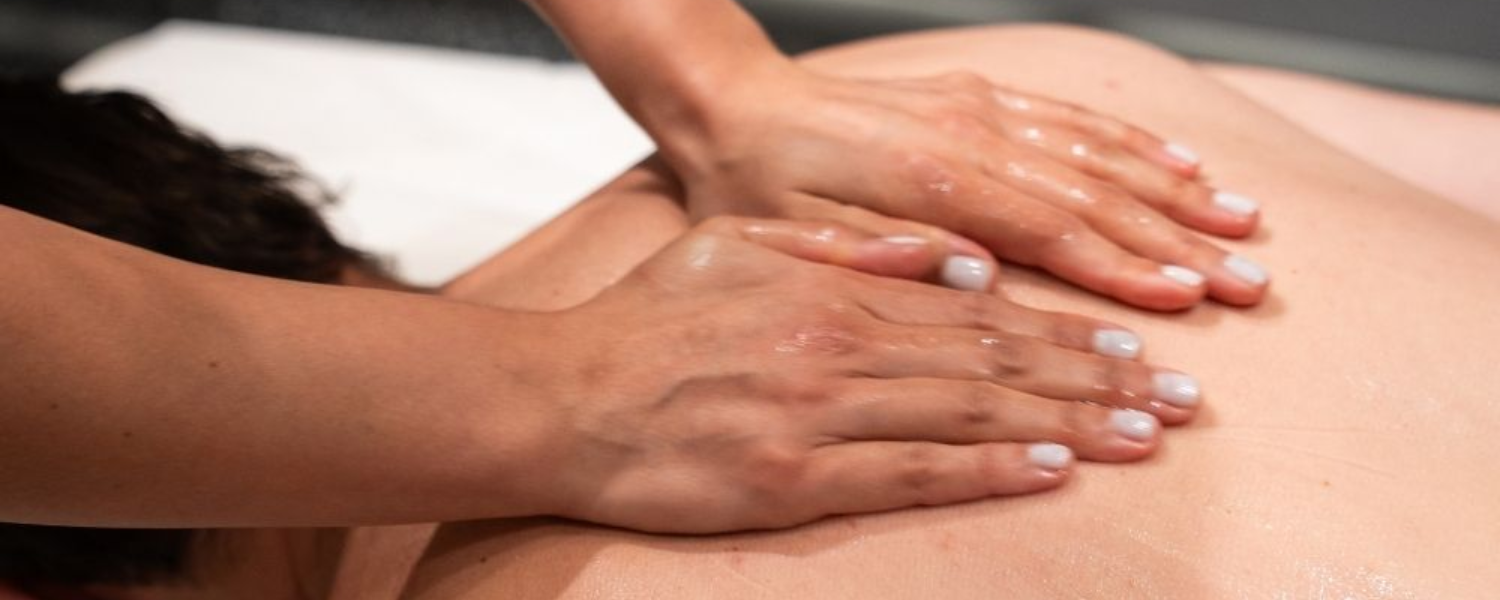
The therapist uses firm pressure and slow, deliberate strokes. Instead of gliding over the skin, the practitioner uses their fingers, thumbs, or elbows to “sink” into the muscle fibers. This process is designed to break up adhesions rigid bands of painful tissue commonly known as “knots.”
These adhesions are critical because they can block circulation and limit movement. By physically breaking down these obstructions, deep tissue work restores the natural elasticity of the muscle, allowing the body to move without the restrictive “pull” that often exacerbates nerve pain.
Can Deep Tissue Massage Help Relieve Sciatica?
The short answer is: Yes. But the “how” is what matters for long-term relief.
Deep tissue massage addresses the anatomical reality of sciatica by focusing on the “neighboring” tissues of the sciatic nerve. When the muscles in your lower back, glutes, and hamstrings become chronically tight, they create a high-pressure environment for the nerve.
Targeting the Piriformis and Lower Back
In cases of piriformis syndrome or general lower back strain, the muscle is essentially “clamping down” on the sciatic nerve. A skilled therapist can apply deep, sustained pressure to the piriformis muscle to force it to release its grip.
By softening the surrounding musculature, we reduce the physical “pinching” of the nerve. This doesn’t just dull the pain; it removes the mechanical cause of the irritation. Furthermore, by addressing the lower back (the lumbar region), deep tissue work helps stabilize the spine, potentially reducing the strain on discs that might be contributing to nerve compression.
How Deep Tissue Massage Improves Circulation for Sciatica

One of the most overlooked aspects of sciatica recovery is blood flow. Nerves, like any other tissue in the body, require oxygen and nutrients to heal. However, when muscles are in a state of constant spasm, they restrict local blood vessels, creating a “stagnant” environment where inflammation builds up.
The Oxygenation Process
As a therapist works through deep layers of tissue, they stimulate the circulatory system. This “pumping” action flushes out metabolic waste and lactic acid while ushering in fresh, oxygenated blood.
For a compressed sciatic nerve, this increased circulation is vital. It helps:
- Reduce Edema: Lowering swelling around the nerve root.
- Accelerate Nerve Repair: Providing the necessary nutrients for the nerve sheath to recover from irritation.
- Warm the Tissue: Making the muscles more pliable and less likely to return to a state of spasm.
Additional Benefits of Deep Tissue Massage for Sciatica

Beyond the direct relief of nerve pressure, this therapy offers a trifecta of benefits that support overall recovery.
Root Cause Pain Relief
Unlike topical creams or painkillers that mask the sensation, deep tissue work addresses the root causes of muscle tightness. By restoring balance to the pelvic and lumbar muscles, it prevents the compensatory movements that often lead to “second-wave” pain in the opposite leg or upper back.
Reduced Inflammation
Chronic muscle tension often leads to a buildup of toxins and inflammatory markers. Deep tissue massage helps the body’s lymphatic system move these toxins out of the affected area, which can significantly lower the “burning” sensation often associated with sciatica.
Stress Reduction and the Mind-Body Link
Living with chronic pain is exhausting. It triggers the body’s “fight or flight” response, which, ironically, causes muscles to tighten even further. Deep tissue work, while intense, helps reset the nervous system. By releasing physical tension, we often see a secondary benefit of reduced mental stress, which breaks the cycle of pain-tension-pain.
What to Expect During a Deep Tissue Massage for Sciatica
If you’ve never had a clinical massage for nerve pain, the experience might be different than a spa day. we prioritize a realistic and therapeutic approach.
Initial Consultation
Your session will begin with a discussion. Your therapist will ask where the pain starts, where it travels, and what movements make it worse. This allows us to determine if we should incorporate other techniques, such as Shiatsu Massage, to help balance your body’s energy and focus on specific pressure points.
The Massage Techniques
The therapist will focus on the lumbar spine, the sacrum, and the gluteal muscles. You will feel slow, deep pressure. Communication is key here; while the pressure should be “intense,” it should never be “unbearable.” You may feel a “good hurt”—that sensation of a deep knot finally giving way.
Post-Massage Effects
It is very common to feel some temporary soreness for 24 to 48 hours after a session. This is often referred to as “treatment soreness” and is a sign that the muscles are realigning. It is highly recommended to read up on Post-Massage Care and Muscle Recovery to ensure you are hydrating and stretching correctly to maximize the benefits.
How Often Should You Get a Deep Tissue Massage for Sciatica?
Sciatica is rarely a “one-and-done” fix. Because the muscles have often been tight for weeks or months, they have developed “muscle memory” that pulls them back into a state of tension.
For Chronic Pain Management
- Initial Phase: We often recommend one session per week for 3–4 weeks. This allows us to break down long-standing adhesions and keep the muscles soft enough for the nerve to begin healing.
- Maintenance Phase: Once the acute pain has subsided, bi-weekly or once-a-month sessions are ideal to prevent the piriformis or lower back muscles from tightening up again.
If your sciatica was triggered by a specific event perhaps a marathon or a lifting injury you might benefit more from a Sports Massage, which combines deep tissue work with functional stretching specifically for athletic recovery.
Holistic Approaches: Lomi Lomi and Beyond
While deep tissue is the heavy hitter for nerve compression, sciatica recovery often benefits from a multi-faceted approach. For instance, if your pain is exacerbated by high levels of systemic stress or poor circulation, incorporating Lomi Lomi Massage can be transformative. This traditional Hawaiian practice uses long, flowing strokes that promote a sense of “nurturing” and fluid movement, which can be a perfect “soft” counter-balance to the intensity of deep tissue work.
Conclusion
Sciatica doesn’t have to be a permanent part of your life. By understanding the mechanical relationship between your muscles and your nerves, you can take proactive steps to reclaim your mobility. Deep tissue massage offers a scientifically grounded, physically effective way to reduce nerve compression, boost circulation, and eliminate the “knots” that keep you in pain.
Whether your pain is caused by athletic strain, hours of sitting at a desk, or a specific condition like piriformis syndrome, targeted manual therapy provides the relief that pills simply cannot match.
Healing is a partnership between your body and our hands. Take the first step toward moving freely and living without the shadow of sciatic pain.