Your body is an incredible vessel. It carries you through your work, your family life, and your daily stresses. But sometimes, while lying on a massage table in a quiet room, something unexpected happens. You aren’t just relaxing; you are tearing up.
For many, the experience of crying during massage can feel confusing, embarrassing, or even alarming. You came in for a tight shoulder, and you left with a damp pillowcase. However, this phenomenon is a deeply documented part of bodywork. It is a sign that your body is doing exactly what it needs to do: letting go.
Is Crying During Massage Normal?
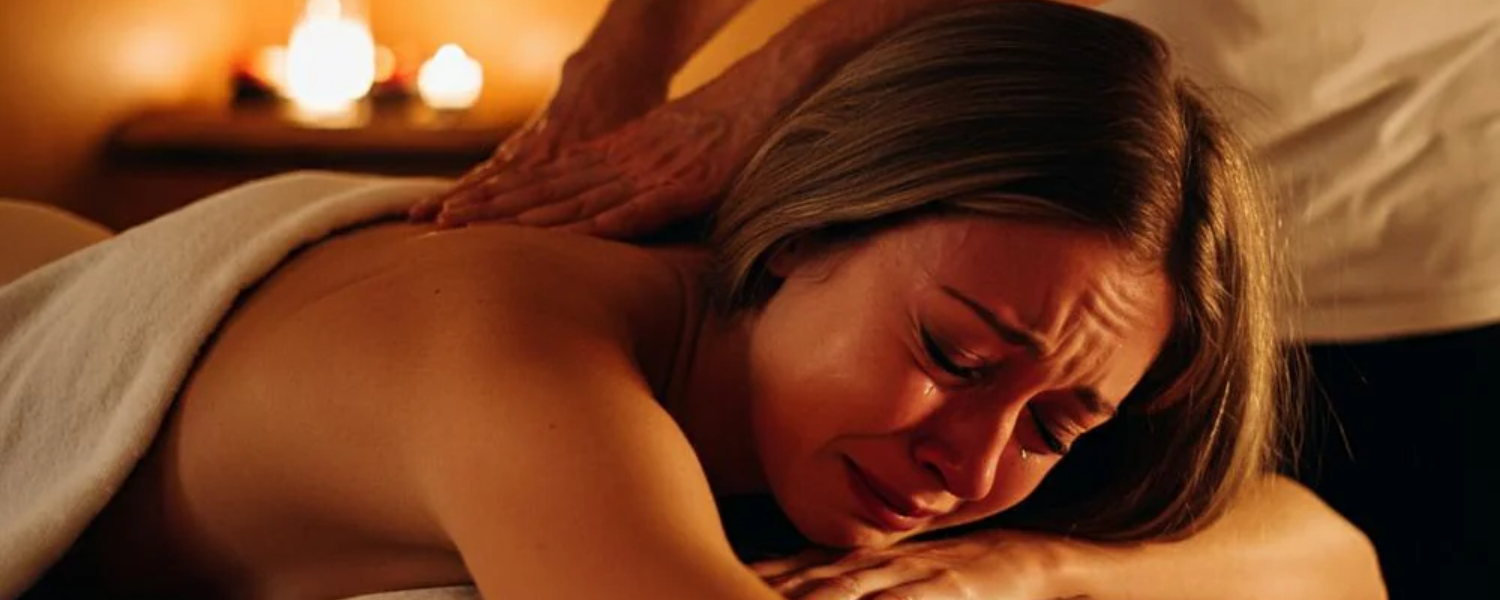
The short answer is a resounding yes. If you find yourself weeping, sobbing, or even just feeling a sudden wave of melancholy during a session, you are not alone. In fact, massage therapists especially those trained in modalities like Shiatsu or Lomi Lomi see this frequently.
Crying during or after a massage is a natural physiological and psychological response. We often think of massage as a purely physical transaction pressure applied to muscle to relieve a knot. In reality, the human body is an integrated system where the nervous system, the fascia, and the mind are inseparable. When the body reaches a state of deep safety and relaxation, the guards we keep up during our busy lives finally drop.
Why Emotions Come Up During Massage
To understand why do I cry during massage, we have to look at the Rest and Digest state. Most of our lives are spent in a state of mild Fight or Flight. We are constantly processing emails, managing household schedules, and navigating social pressures. This keeps our sympathetic nervous system on high alert.
When a skilled therapist begins to work, your heart rate slows, and your cortisol levels drop. This shift triggers the parasympathetic nervous system. For many people, this is the first time in weeks or even years that they have felt truly safe and off the clock. In that safety, the emotions that we usually suppress to stay productive begin to bubble to the surface. It isn’t necessarily that the massage made you sad; it’s that the massage gave you the permission to feel the sadness that was already there.
How the Body Stores Stress and Tension

There is a famous saying in the world of bodywork: The issues are in the tissues. While it sounds like a catchy phrase, it is backed by the science of somatics. Our fascia the connective tissue that weaves through our entire body is highly reactive to stress.
When we experience a stressful event or a period of prolonged anxiety, our bodies physically contract. We hunch our shoulders, tighten our jaws, and shorten our breath. If that stress isn’t fully processed, the body remains in a state of bracing. Over time, this bracing becomes our default physical posture.
By utilizing emotional release massage techniques, a therapist can physically break up these bracing patterns. When a chronic knot is finally released, the energy and the memory associated with that tension can be released as well. This is often why a specific touch on the neck or the lower back can trigger a sudden memory or a flash of emotion.
Crying During Deep Tissue, Shiatsu, or Lomi Lomi Massage
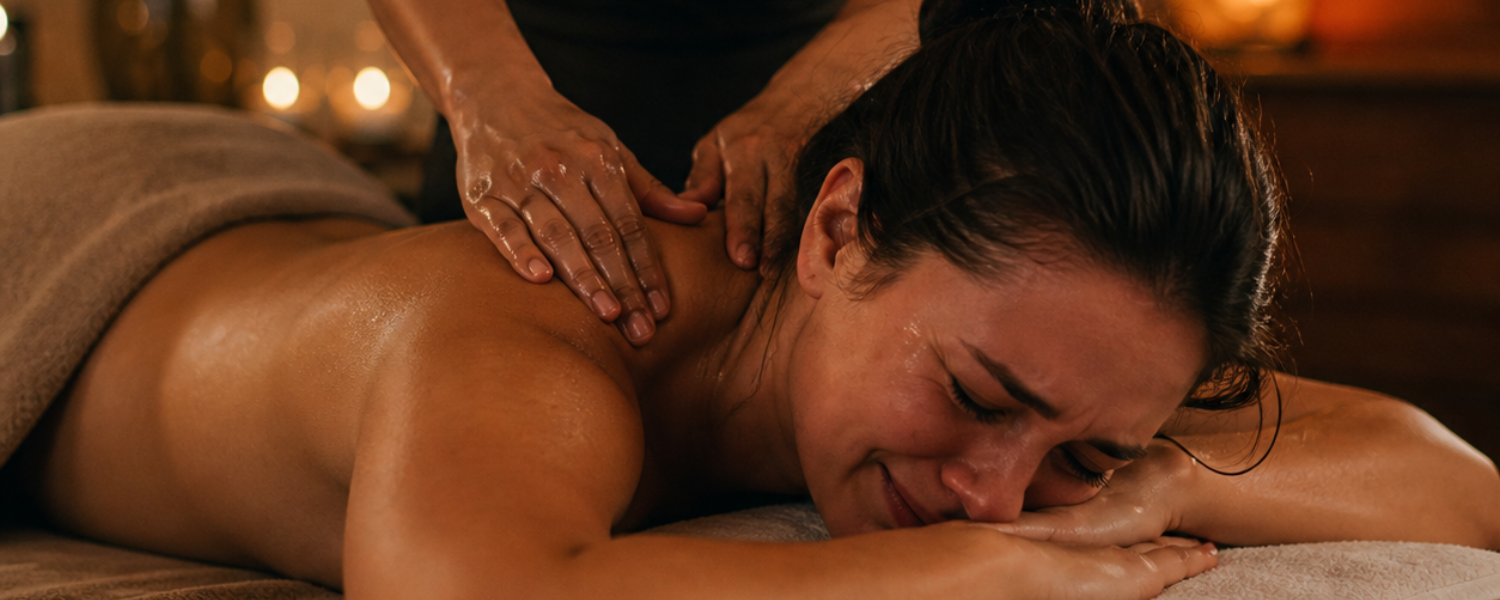
Different styles of massage can trigger emotional responses in various ways:
- Deep Tissue Massage: Because this involves intense pressure on the deeper layers of muscle, it can force a release of long-held tension. The physical intensity can sometimes bypass our mental filters, leading to a deep tissue massage benefits that include an emotional breakthrough.
- Shiatsu Massage: This Japanese modality works with the body’s energy pathways, or meridians. By applying pressure to specific points, Shiatsu aims to balance Qi (energy). If energy has been stagnant due to grief or stress, the restoration of flow can manifest as tears. Shiatsu massage are often as much about mental clarity as they are about physical relief.
- Lomi Lomi Massage: This traditional Hawaiian practice is often referred to as loving hands massage. It uses long, flowing strokes that mimic the ocean. The nurturing, rhythmic nature of Lomi Lomi is designed to treat the whole person. It is perhaps the most common style for Lomi Lomi massage benefits related to emotional healing, as the constant contact makes the recipient feel incredibly supported and held.
Sometimes the body speaks through emotion before the mind can explain it.
Emotional Release vs. Physical Discomfort
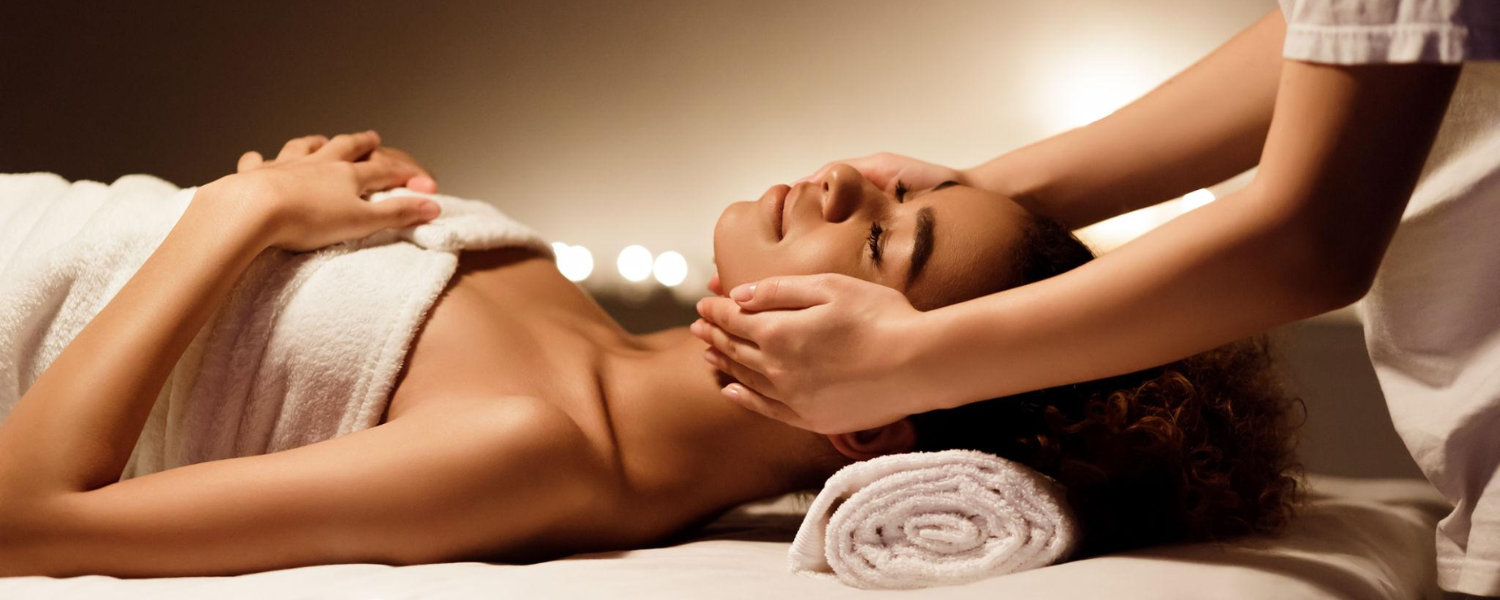
It is important to distinguish between crying because of an emotional release and crying because the pressure is simply too high.
- Physical Pain: This is usually a sharp, stinging, or breath-holding kind of pain. If you are crying because the therapist is hurting you, you must speak up immediately. A massage should never be agonizing.
- Emotional Release: This feels different. It often comes with a sense of relief, a heaviness leaving the chest, or a sudden realization. You might feel a bit vulnerable, but there is a sense of cleansing involved.
Feeling emotionally overwhelmed or physically tense?
Book a calming Shiatsu or Lomi Lomi massage at Shiatsu Massage Center Waikīkī and give your body space to release.
What to Do If You Cry During a Massage
If the tears start to flow, the best thing you can do is nothing. Do not try to swallow the tears or apologize to the therapist.
- Breathe: Continue to take deep, slow breaths. This helps your nervous system process the release.
- Acceptance: Remind yourself that this is a healthy, detoxifying process.
- Communication: You don’t have to explain why you are crying (you might not even know why!). A simple, I’m just having an emotional release, I’m okay, is enough to let your therapist know you don’t need them to stop.
- Post-Massage Care: After the session, you may feel raw or tired. This is part of the post massage care process. Drink plenty of water and give yourself a quiet evening to rest.
How Shiatsu Massage Center Creates a Safe Space
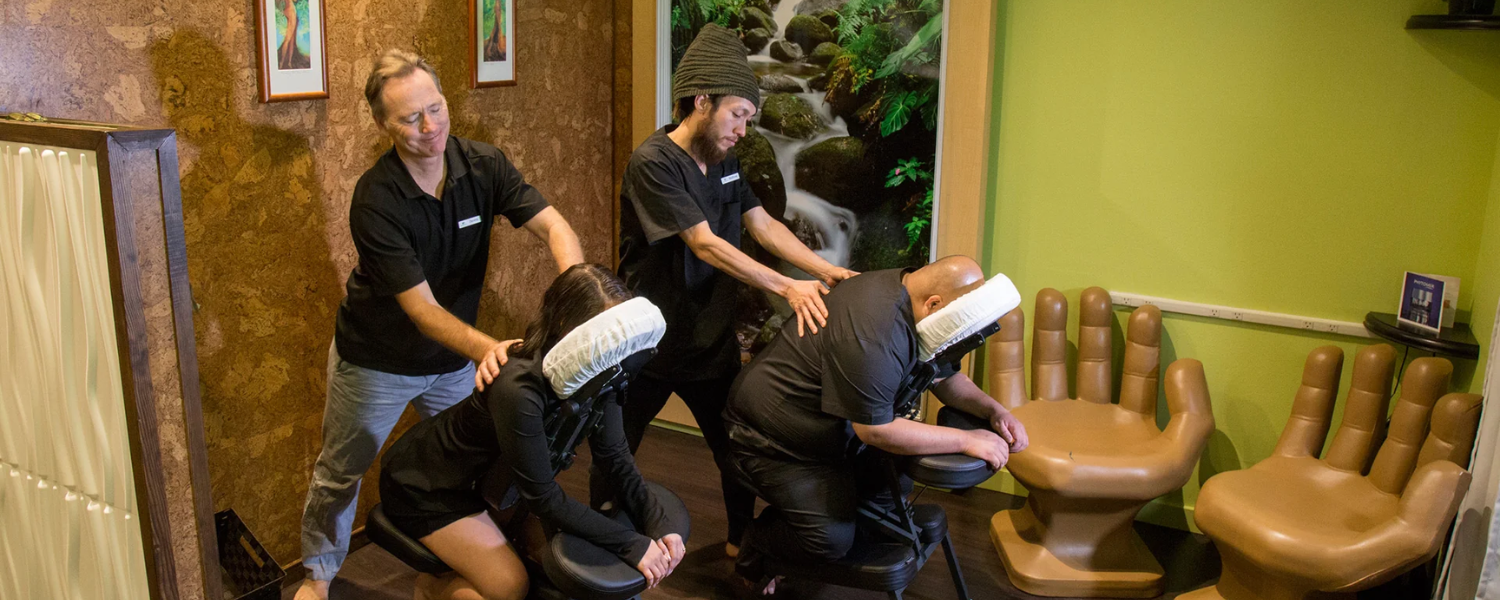
At Shiatsu Massage Center, we understand that healing is not linear. Our therapists in Honolulu are trained to handle the delicate balance between physical manipulation and emotional support. We provide a safe container a quiet, dim, and non-judgmental environment where you are allowed to be exactly who you are.
Whether you are seeking a massage for anxiety and sleep or looking to address detox symptoms after massage, we prioritize your comfort. Our practitioners are familiar with somatic release and are there to hold space for you, ensuring that your journey toward wellness is both physical and emotional.
Crying during massage is not weakness it can be your nervous system finally feeling safe enough to let go.
Conclusion: Let Your Body Release and Heal
Crying during a massage isn’t a sign that something is wrong; it’s a sign that something is finally going right. It means you have moved past the surface-level relaxation and tapped into a deeper level of healing. When we allow ourselves to cry, we wash away the accumulated dust of our daily lives.
By choosing the right therapy whether it’s the structured pressure of Shiatsu or the flowing grace of Lomi Lomi you are giving your body a chance to speak. If you’ve been wondering which massage therapy is best for you, consider what your heart needs as much as what your muscles need.
Your body may be holding more than muscle tension.
Let our experienced therapists help you relax in a safe, peaceful setting.
FAQ Section
1. Is it normal to cry while getting a massage?
Yes, it is very common. It is often referred to as a somatic release, where the body lets go of stored emotional energy as the muscles relax.
2. Does massage release emotional trauma?
While massage is not a substitute for psychotherapy, it can help release the physical tension associated with trauma. Many people find it a helpful complementary therapy for emotional healing.
3. Does crying relieve stress?
Absolutely. Crying releases oxytocin and endogenous opioids (endorphins), which help ease both physical and emotional pain.
4. Can you get a massage if you have high blood pressure?
Generally, yes, and massage can actually help lower blood pressure by reducing stress. However, you should always consult your doctor first and inform your therapist so they can adjust their techniques.
5. Is crying after a massage a bad sign?
Not at all. Crying after massage often means the processing continued even after you left the table. It’s a sign of a deep, successful session.
6. Which massage is best for emotional release?
Lomi Lomi and Shiatsu are excellent choices. Lomi Lomi offers a nurturing, connected feel, while Shiatsu focuses on unblocking energy flow.
7. Should I tell my massage therapist if I feel emotional?
You don’t have to, but it can help. If you feel a wave of emotion coming on, letting your therapist know allows them to hold a supportive space for you or adjust their touch to be more grounding.